Jennifer Garner brings Save the Children’s mission to Arkansas
LITTLE ROCK, Ar. — Actress Jennifer Garner brought a national spotlight to Arkansas last week, but the work she came to highlight was distinctly local.
Garner traveled to the Natural State on behalf of Save the Children, an organization she has represented for more than 15 years, for a visit that stretched from an Arkansas classroom to the highest levels of state government. She visited a Stone County schoolwhere Save the Children operates and met with Gov. Sarah Huckabee Sanders, Lt. Gov. Leslie Rutledge, Attorney General Tim Griffin, Secretary of Education Jacob Oliva and key state lawmakers.
The visit put a national face on an organization that has quietly built a substantial footprint in Arkansas. Save the Children now reaches more than 30,000 children across 27 counties, partners with Arkansas schools and educators, employs more than 140 Arkansans and brings additional resources to rural communities across the state.
For Garner, the focus on rural America is personal. Raised in West Virginia, she has made expanding opportunities for children in rural communities a central part of her work with Save the Children. She has served as an Artist Ambassador for the organization for more than 15 years and joined its Board of Trustees in 2014, using her platform to advocate for children and early education across the country and in Washington.
Save the Children in Arkansas
Founded in 1919, Save the Children works in the United States and around the world to help children grow up healthy, educated and safe.
While the organization is perhaps best known for its international humanitarian work, it also maintains a significant presence in rural communities across the United States, including Arkansas.
In Arkansas, Save the Children works alongside schools, teachers, families and local organizations to strengthen literacy and math skills, expand early childhood opportunities, address food insecurity and help communities recover when severe weather and other emergencies disrupt children’s lives.
Those partnerships are producing measurable results. During the 2024-2025 school year, 75 percent of regular participants showed growth in literacy and 71 percent showed growth in math, according to Save the Children. Up to 88 percent of students in its education programs demonstrated typical or high academic growth.
Save the Children’s literacy programming aligns with Arkansas’ Science of Reading standards, and the organization is an Arkansas Department of Education High Impact Tutoring vendor.
Sen. Breanne Davis of Russellville, who serves on the Senate Education Committee and the Senate Children and Youth Committee, praised the organization’s work alongside Arkansas educators and its support for the state’s education initiatives.
“It is always an honor to visit with Save the Children’s state team. Their organization has come alongside our work with the LEARNS Act in terms of supporting the tireless literacy efforts of teachers in the classroom. They are feeding the minds and bellies of our children and supporting young families all over our state. I look forward to seeing Arkansas continue their strong support for the work of Save The Children,” Davis told the Arkansas Reporter.
The support extends beyond the classroom.
Save the Children says its Arkansas partnerships helped children and families access more than 54,000 nutritious meals in 2025. The organization also supports Arkansas’ early childhood workforce through professional development, scholarships and credentials, while providing emergency response and recovery assistance following severe weather.
The organization also brings outside resources into the communities it serves. In 2025, Save the Children says it matched state funding at a rate of 7-to-1 to support programs in Arkansas.
That work takes on particular importance in rural Arkansas, where distance and limited access can create additional challenges for children and families.
Save the Children reports that nearly half of children in rural Arkansas are eligible for free or reduced-price school meals and that access to child care and early learning opportunities can be limited by geography. The organization works through existing schools, educators and community partners to help extend the resources available to Arkansas families.
Garner brings the message to Arkansas leaders
Garner’s visit brought the work happening in Arkansas communities directly to many of the state officials shaping education and children’s policy.
The meetings gave Arkansas policymakers an opportunity to hear directly about Save the Children’s work in the state and its partnerships with rural schools and communities.
Attorney General Tim Griffin, who met with Garner during her visit, highlighted both her personal commitment to the organization and its impact on Arkansas children.
“I appreciate Jennifer Garner taking the time to invest in Arkansas children. I enjoyed learning about her work with Save the Children and the impact it has made here in our own state, especially through its support of individualized reading instruction. Her commitment to helping kids was apparent, and she has effectively used her success, drive, and ingenuity to improve the lives of countless children,” Griffin told the Arkansas Reporter.
Garner also took time away from the Capitol and state offices to see that work firsthand.
She traveled to Stone County to visit a school where Save the Children programming operates, spending time with students and educators and seeing the organization’s Arkansas programs in action.
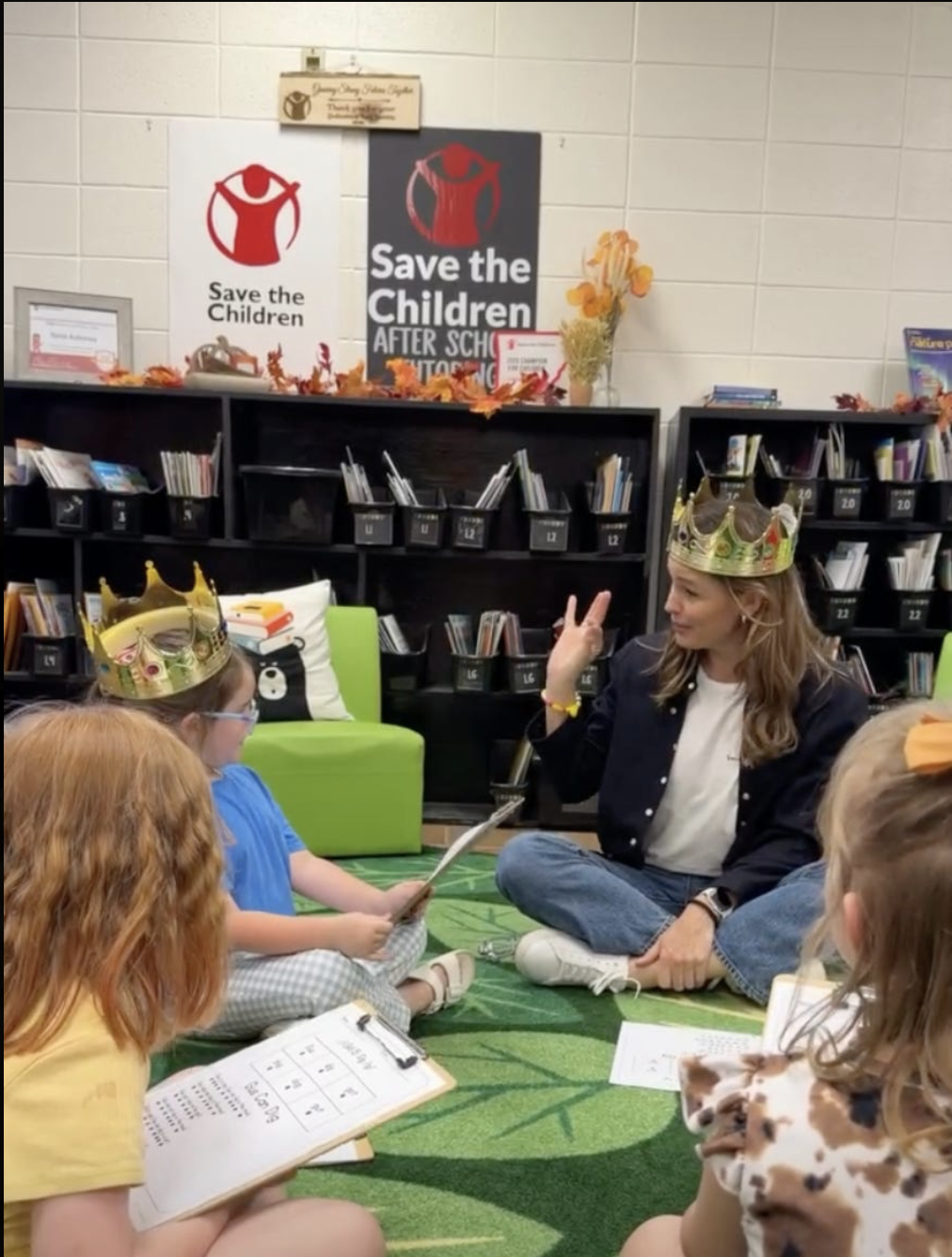
The Stone County visit underscored a central part of Save the Children’s model in Arkansas: the work is carried out locally, through the schools, educators and communities it serves.
For Arkansas, those partnerships can mean additional tutors in schools, stronger literacy and math support, more resources for teachers and early childhood professionals, meals for families facing food insecurity and additional help when disasters strike.
Across the state, schools, educators, families, nonprofit organizations and state leaders are working to reach children who may live miles from resources readily available in larger communities. Save the Children adds to that effort by bringing resources and expertise into communities while employing Arkansans to carry much of the work out locally.
Garner’s visit brought national attention to that partnership. But the work she came to Arkansas to highlight is distinctly local — happening every day in Arkansas classrooms, carried out by Arkansas educators and employees, and strengthened by communities determined to give their children every opportunity to succeed.